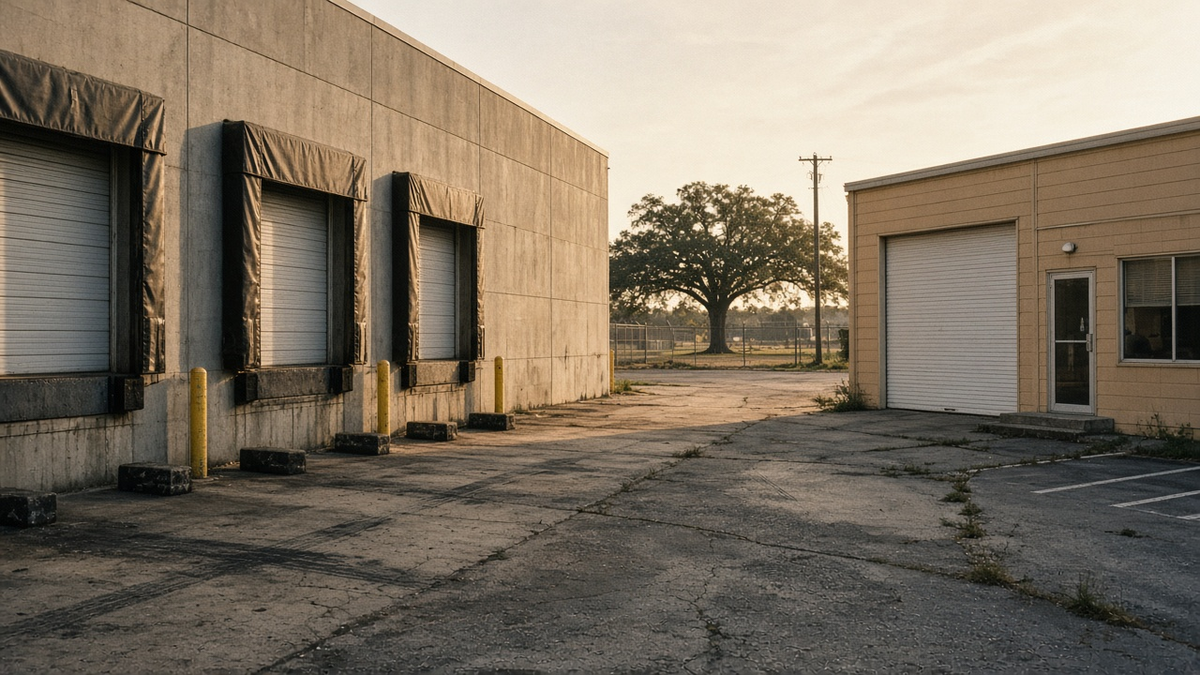
Dock-high warehouse or flex space in Aldine? We lay out the honest tradeoffs in loading, office, access, permits, and flood checks, and who each kind of building tends to fit.
Aldine sits in north Harris County, close to George Bush Intercontinental Airport, with the Hardy Toll Road and a rail line running through it and I-45 North close by. That location brings us a steady mix of industrial users: distributors, airport related freight, contractors, service trades, and small makers. Most of them end up asking the same question early. Do we need a dock-high warehouse, or will flex space do the job?
There is no universal right answer, and anyone who tells you there is probably has one of the two to sell you. This piece covers commercial industrial property only, and it lays out the tradeoffs as plainly as we can.
Two buildings, two different jobs
A dock-high building has its warehouse floor raised to about the height of a truck bed, so a trailer can back up and a forklift can drive straight in and out. These buildings are usually built around loading and storage, with a deep truck court, taller clear height, and a small office in one corner.
Flex space is built closer to the ground. Suites usually have grade level roll up doors that a van or box truck can pull through, plus a larger share of finished office, showroom, or counter space up front. Many flex buildings are split into smaller suites with several tenants sharing one site.
Where dock-high earns its keep
If freight arrives on full size tractor trailers, a dock door is hard to beat. Unloading is faster, safer, and easier on your crew than pulling pallets off a trailer at ground level. Dock-high buildings also tend to come with the truck court and turning room that larger trucks need, which is often the real constraint, not the building.
Taller clear height can let you rack higher and store more in the same footprint. And for owners, a well located dock-high building may appeal to a wide pool of future tenants and buyers, since loading is the feature many warehouse users look for first.
Where dock-high gets awkward
Dock-high space can be a poor fit if most of your deliveries come in vans and pickups. Without a grade level door or a ramp, small vehicles cannot drive in, and walking a hand truck up from the parking lot gets old quickly. These buildings may also be larger than a small user needs, and the office is often too small for a team that sells, designs, or meets clients on site.
Customer visits are another weak spot. A raised floor, a truck court, and a dock apron do not make a friendly front door for walk-in buyers.
Where flex shines
Flex works well for businesses that mix office and shop. A contractor can keep estimators up front and trucks and materials in back. A small manufacturer can run a front office and a showroom with production behind the wall. Grade level doors make daily van traffic easy, and smaller suites may let a growing business take only what it needs.
Flex sites often have more parking close to the door, which matters if employees and customers come and go all day.
Where flex comes up short
The honest drawback is freight. Most flex suites are not built for regular tractor trailer deliveries, and the drive aisles and parking layout may not leave room for a big truck to turn. Clear height is usually lower, so storage is limited. More finished office can also mean more air conditioning to run and maintain, and in a multi tenant building you share the drive, the parking, and the noise with your neighbors.
Some flex buildings have one dock or a ramp at the back. That can be a workable middle ground, but confirm it actually fits the trucks you use before you count on it.
Questions that usually settle it
When we sit down with an Aldine user, a few questions tend to make the choice for them. How does freight arrive today, and how will it arrive in a few years? Who visits the building, and how often? How much of your team sits at a desk versus working the floor? Do you need outdoor storage or a place to park trucks overnight? Are you leasing for a few years or buying for the long run?
Be cautious about planning to convert one type into the other. Adding a dock to a building built at grade can mean real construction, and adding office or showroom space to a warehouse can bring permits, parking, restrooms, and accessibility work under the Texas Accessibility Standards and the Americans with Disabilities Act. It is often cheaper to choose the right building than to rebuild the wrong one.
City limits, county rules, and flood checks
The Aldine area is split. Much of it is unincorporated Harris County inside Houston's extraterritorial jurisdiction, while parts of the broader area sit inside the City of Houston. Neither the city nor the county has zoning, but permits still come from different offices. In the city, building permits generally run through the City of Houston. In unincorporated areas, they generally run through the Harris County Engineering Department under the Harris County Fire Code, with a certificate of compliance at the end. Our Hockley industrial permits guide walks through the county side, and our Greenspoint build-out guide covers how city permit review generally works next door.
A change in how a space is used, such as turning storage space into a showroom that welcomes the public, may trigger new review either way. Recorded deed restrictions can also limit uses, outdoor storage, and truck parking, so read the title work closely.
Flooding deserves a close look in this part of Harris County, which saw serious flooding during Hurricane Harvey. Check the FEMA flood maps and the county floodplain rules for any tract you are serious about. A raised dock floor is not the same thing as a building elevated above the flood level, so ask for the building's flood history and any elevation certificate rather than assuming.
Our straight answer
If trailers are the heart of your business, we lean dock-high and suggest you judge the truck court as hard as the building. If your day is vans, customers, and a team in the office, flex usually fits better and costs less to run. If you honestly need both, look for a building that already has a dock and a grade level door rather than planning to add one later. Owner users leaning flex can also read our guide to buying a small flex building.
This article is general information, not legal advice. Permit paths, fire code review, floodplain rules, accessibility requirements, and deed restrictions vary by property and by jurisdiction and can change, so confirm them with the City of Houston or Harris County, as applies, and a qualified Texas real estate attorney before you commit.
Weighing dock-high against flex for an Aldine industrial move? Talk with our team and we will help you match the building to how your business actually works.