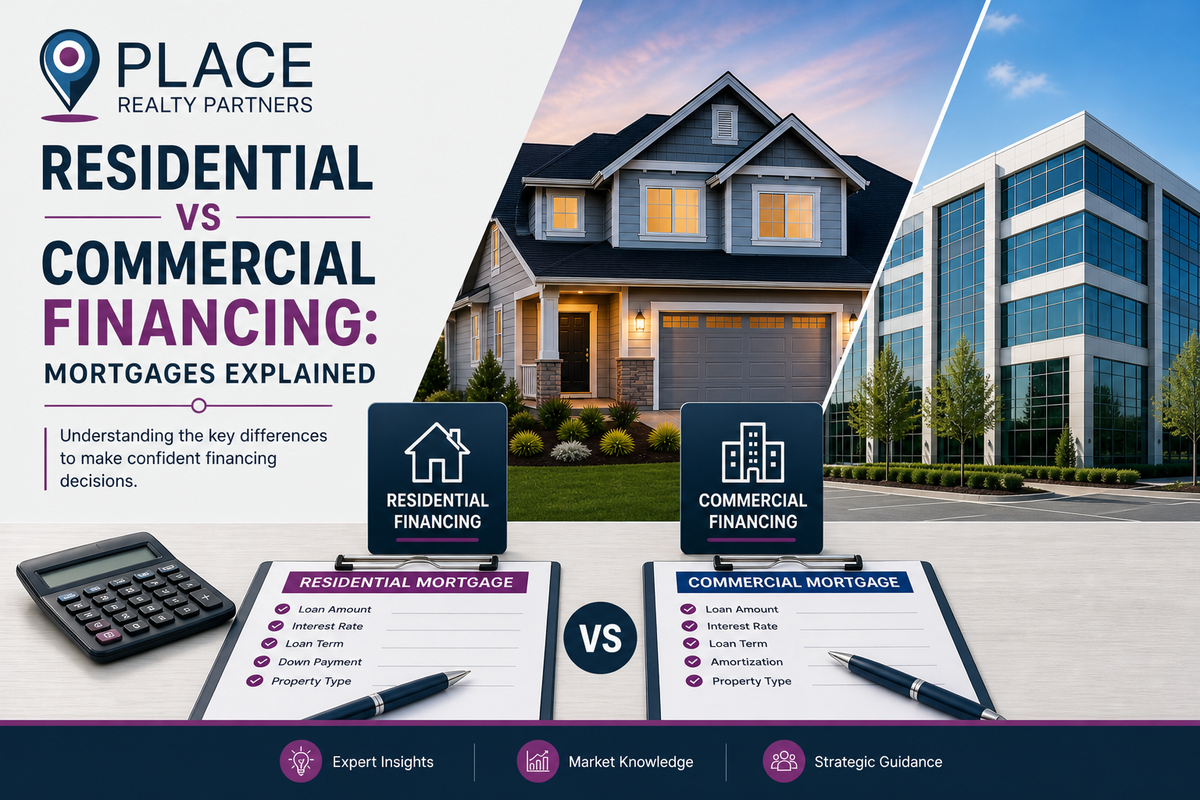
Learn the key differences between residential and commercial mortgages, including FHA loans, SBA loans, and down payment requirements in Spring, Tomball, Cypress, Katy, and markets surrounding Northwest Houston.
Financing is one of the most important parts of any real estate transaction. While many buyers assume all loans work the same way, there are major differences between residential and commercial mortgages.
In markets like Spring, Tomball, Cypress, The Woodlands, Magnolia, Katy, and the greater Houston area, both types of purchases are common, but each follows a different structure. Whether you are buying your first home or considering a commercial investment, understanding how financing works will help you plan effectively and avoid costly mistakes.
Residential Mortgages: Simplicity and Accessibility
Residential financing is designed to be accessible for individuals and families. Lenders focus primarily on the borrower's financial profile, including income, credit score, employment history, and debt levels.
One of the biggest advantages of residential loans is the variety of financing options available.
FHA loans are especially popular among first-time homebuyers. These loans allow buyers to purchase a home with a down payment as low as 3.5 percent, making them one of the most accessible entry points into homeownership. FHA loans also offer more flexible credit requirements compared to conventional loans.
Conventional loans are another common option. These typically require a down payment ranging from 5 percent to 20 percent, depending on the borrower's qualifications. Buyers who put down 20 percent or more can often avoid private mortgage insurance, which helps reduce monthly costs.
VA loans and other specialized programs may offer zero down payment options for qualified buyers, though eligibility requirements apply.
Loan terms for residential properties are usually long, often 15 to 30 years. Interest rates are typically lower than commercial loans, and fixed rate structures are common. This allows homeowners in Spring, Tomball, Cypress, Katy, and The Woodlands to lock in stable payments and plan for the long term.
Commercial Mortgages: Performance Driven Financing
Commercial financing operates very differently. Instead of focusing only on the borrower, lenders evaluate the income producing potential of the property.
The primary concern is whether the property can generate enough revenue to support the loan. This applies to retail shopping centers, office buildings, and industrial warehouses across growing corridors in Houston, Cypress, Katy, and Magnolia.
Traditional commercial loans usually require a down payment between 20 percent and 35 percent. These loans often come with shorter terms, typically five to ten years, even if amortized over a longer period. This can result in a balloon payment or the need to refinance at the end of the term.
Interest rates are generally higher, and underwriting is more detailed. Lenders review lease agreements, tenant stability, operating expenses, and overall cash flow before approving financing.
SBA Loans for Commercial Real Estate
For business owners, SBA loans offer one of the most attractive financing options available.
The SBA 7(a) and SBA 504 loan programs are commonly used for owner occupied commercial real estate. These loans are partially backed by the government, which reduces risk for lenders and allows for more favorable terms.
One of the biggest advantages of SBA loans is the lower down payment requirement. In many cases, buyers can secure a commercial property with as little as 10 percent down. This is significantly lower than traditional commercial loan requirements.
SBA loans also offer longer repayment terms, often up to 25 years for real estate. This helps improve cash flow and makes ownership more manageable for small business owners.
These programs are widely used across Cypress, Katy, Tomball, and Magnolia, where business owners are looking to control occupancy costs while building equity in high growth areas.
Key Differences Between Residential and Commercial Financing
The differences between residential and commercial financing impact both affordability and long term strategy.
Residential loans are designed for stability and ease of entry. Lower down payments, longer terms, and predictable payments make them ideal for individuals purchasing a primary residence.
Commercial loans are structured around performance. Higher down payments, shorter terms, and income based underwriting create a more complex but potentially more rewarding investment.
In Northwest Houston, including Spring, The Woodlands, Cypress, Katy, and surrounding areas, understanding these differences is essential when deciding which path to pursue.
How Financing Impacts Your Strategy
For residential buyers, financing is about affordability and long term security. Locking in a stable mortgage allows homeowners to build equity while benefiting from appreciation in areas like Spring, Katy, and Cypress.
For commercial buyers, financing is a strategic tool. Leveraging capital to acquire income producing assets can accelerate wealth building, but it also requires careful analysis and planning.
Many buyers begin with residential ownership and transition into commercial investments over time as their financial position strengthens.
Local Market Insight
Spring, Tomball, Cypress, The Woodlands, Magnolia, Katy, and the greater Houston area continue to experience strong population growth and economic expansion. New residential developments, expanding retail corridors, and increasing demand for industrial space are shaping the market.
For residential buyers, this growth supports long term appreciation and stable demand. For commercial buyers, it creates opportunities to serve growing communities with retail, service based businesses, and logistics space.
Understanding financing options early allows buyers to move quickly and confidently in a competitive environment across Northwest Houston.
Key Takeaways
- Residential financing is designed for accessibility with lower down payments and longer loan terms
- Commercial financing focuses on income and typically requires higher upfront capital
- FHA loans allow homebuyers to enter the market with as little as 3.5 percent down
- SBA loans can reduce commercial down payments to around 10 percent for qualified buyers
- Choosing the right financing structure depends on your long term financial goals
Next Steps
If you are considering buying in Spring, Tomball, Cypress, Katy, The Woodlands, Magnolia, or the greater Houston area, understanding your financing options is the next step.
Every situation is different, and choosing the right loan structure can have a major impact on your short term affordability and long term results.
Contact us at Place Realty Partners to discuss your goals and explore the best residential or commercial opportunities available in Northwest Houston.