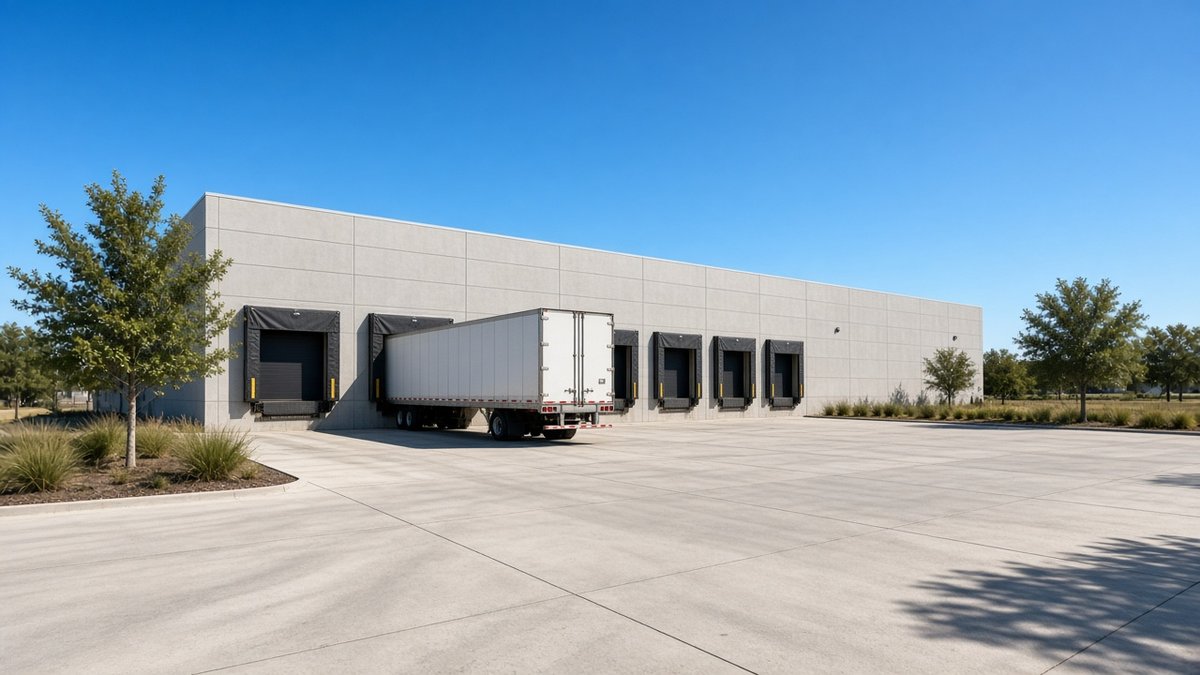
Leasing or buying industrial space in Spring, TX? Here is what occupiers and owners should check first, from truck access and power to deed restrictions and utilities.
Spring sits right where north Harris County meets south Montgomery County, and that location is exactly why industrial users keep looking at it. You can reach I-45, the Hardy Toll Road, and the Grand Parkway without fighting through the Loop, and Bush Intercontinental is a short drive east. For a contractor yard, a distribution operator, or a light manufacturer serving the north side, that access is the whole pitch.
Access alone does not make a building work, though. Before you sign a lease or write an offer on industrial space in Spring, these are the items that decide whether the site fits your operation.
Start with how trucks get in and out
Highway proximity on a map is not the same as easy truck movement. Drive the route at the hours your trucks will run. Look at the turn off the frontage road, the width of the drive, and whether a 53 foot trailer can swing into the dock without backing across traffic.
- Dock count and whether doors are dock high, grade level, or both
- Truck court depth and whether trailers can stage on site
- Shared drives or cross access easements with neighbors
- Rail or overhead crane needs, if your process depends on them
Check the building, not just the square footage
Two buildings with the same footprint can run very differently. Clear height controls how you rack. Column spacing controls how you lay out the floor. Power controls what equipment you can plug in. Ask for the electrical service in writing, including amperage and whether three phase power is on site, before you plan a line around it.
Also confirm fire sprinkler type if you plan to store high piled goods. A sprinkler upgrade can change your budget and timeline more than almost any other item.
Know the rules in unincorporated Spring
Most of Spring is unincorporated, so there is no city zoning code to lean on. That flexibility is real, but it does not mean anything goes. Deed restrictions, recorded covenants, and county permitting still apply, and some business parks carry their own use limits on outdoor storage, truck parking, or hours.
Utilities work differently too. Many sites are served by a municipal utility district rather than a city system, so water, sewer capacity, and tax rates can vary from one park to the next. Pull the restrictions and the utility provider early, not after you have negotiated rent.
Leasing versus owning
Most occupiers in Spring lease, and industrial leases here are commonly written on a net basis, which means you pay a share of taxes, insurance, and maintenance on top of base rent. Read how those costs are estimated and what happens when they rise. If you are new to that structure, our guide to triple net leases in Northwest Houston walks through it.
Owning makes sense when you plan to stay long term, want control over improvements, or would rather build equity than pay a landlord. The tradeoff is capital tied up in the building and responsibility for the roof, the parking lot, and everything in between.
Questions to ask before you commit
- Can the site handle my peak truck volume, not just an average day?
- Does the power and clear height support where the business will be in three years?
- What do the deed restrictions allow for outdoor storage and parking?
- Who provides water and sewer, and is there capacity for my use?
- On a lease, what operating costs am I responsible for, and are they capped?
If you are searching for a warehouse, flex building, or yard in Spring, we help occupiers narrow the list and negotiate terms through tenant representation. Owners with vacant industrial space can reach us the same way.
Talk through your site
Every industrial search in Spring comes down to the same few questions: access, building specs, restrictions, and cost. Get those answered early and the rest of the deal moves faster. Contact Place Realty Partners to talk through your requirements.