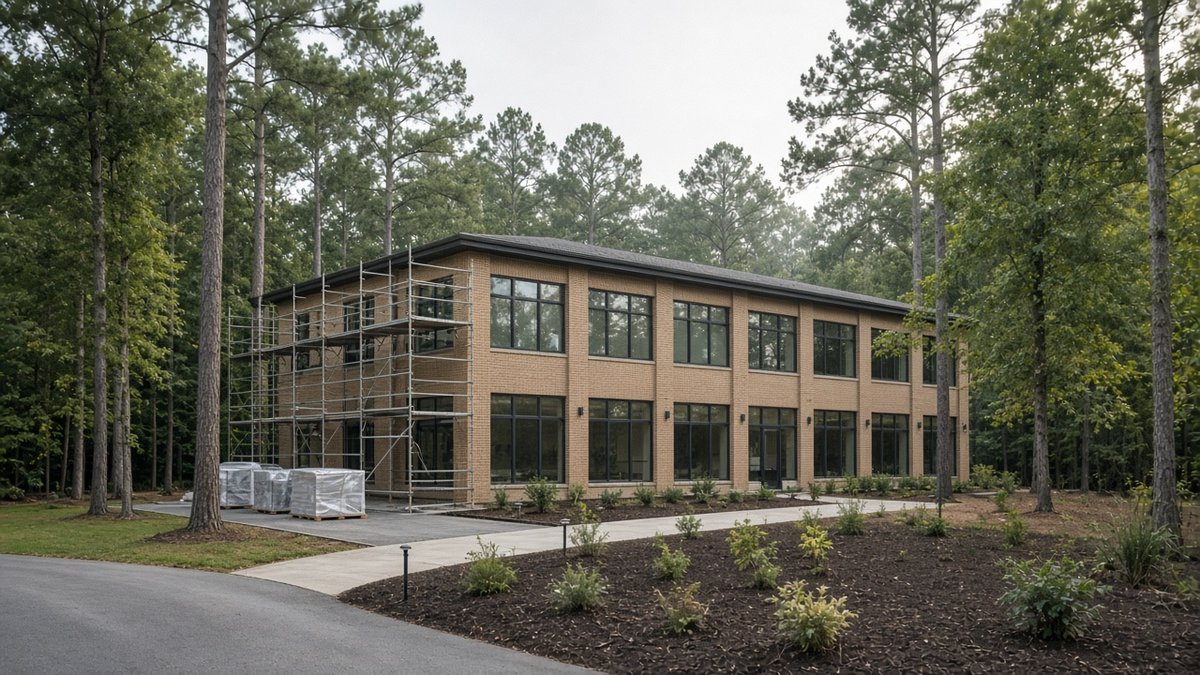
Planning signage, facade, lighting, or site changes at a Woodlands office building? Here is how DSC covenant review fits alongside building permits.
Changing the outside of an office building in The Woodlands usually means two approval tracks, not one. Building permits and code review are one track. The other is covenant review under The Woodlands commercial covenants and the Commercial Planning and Design Standards, administered through The Woodlands Township. Plan for both early, or risk a sign, canopy, or paint scheme that gets ordered before anyone has approved it.
Why office exteriors get a second review
The Woodlands was planned around a consistent look: buildings set into the trees, quiet colors, screened equipment, and signage that does not compete with the forest. The covenants protecting that look apply to commercial property, and the Township's commercial standards state that exterior improvements need review and approval before construction begins. The same standards say the reviewing committee does not decide building code compliance. So covenant approval does not replace a building permit, and a building permit does not replace covenant approval. Plan on both, and confirm with the Township and the applicable permitting authority which approvals your project needs.
What the DSC is, in plain words
The Development Standards Committee (DSC) adopts and enforces standards for property use and maintenance. Its members include residents appointed by the Township Board and appointees from The Woodlands Development Company. It reviews improvement requests on existing commercial properties, and it is the only committee that can grant variances. Township Covenant Administration staff support the committee and are the right first call.
Two details trip people up. First, the commercial standards name more than one plan review committee, depending on which set of covenants covers a site, so the DSC may not be the reviewing body for every office building. Township staff can tell you which committee has jurisdiction over yours. Second, initial construction on undeveloped land is reviewed by the developer, not the DSC. This piece covers existing office property, under the commercial standards only.
Exterior changes that commonly need review
The commercial standards cover building design, signage, landscaping, lighting, parking, and screening. Office projects that usually call for a staff conversation include:
- Signage: building and monument signs, tenant panels, rebranded sign faces, and temporary signs. Some sign types are pre-approved and others require approval, so ask which applies.
- Facade, paint, and materials: new cladding, a repaint, or new accent colors. Colors are expected to stay in harmony with the surroundings.
- Lighting: new or replacement fixtures on the building, in the parking lot, or on signs.
- Landscaping and trees: removals, new plantings, and anything near forest preserve areas.
- Site and parking: restriping, added spaces, drive changes, and dumpster enclosures.
- Rooftop and mechanical equipment: new HVAC units, generators, and how they are screened from view.
- Entry changes: canopies, awnings, and outdoor seating areas on a visible elevation.
Interior work that cannot be seen from outside is generally not part of covenant review, though it still has to meet code. If you are unsure whether a change counts as exterior, ask.
Owner or tenant: who does what
The commercial standards place responsibility for compliance on the owner. For a tenant, that makes the lease as important as the covenants. Most office leases require landlord consent for exterior signage or changes outside the suite, and many landlords keep their own sign criteria on top of the Township standards. Before anyone designs anything, find out:
- Whether the lease grants signage rights, and where on the building or monument.
- Who submits the covenant application: the owner, the tenant, or the tenant's contractor with owner sign-off.
- Who pays for design work, application costs, and any revisions the review requires.
- Who carries the risk if approval comes back with conditions.
Tenants can settle these points in writing during a new lease or renewal, a regular part of our tenant representation work. Owners repositioning a building with a new facade or monument sign should build the review into the leasing timeline, a standard topic in our landlord representation planning.
Timing around move in, lease start, and rebranding
The DSC works from a published schedule of meetings and application deadlines, and the standards note that an incomplete application can delay review. Ask staff about timing for your scope. We often see sign, paint, and canopy work scheduled backward from a move in date or brand launch, with covenant review squeezed in at the end. It belongs at the front. With a fixed rebrand date, call staff as soon as you have a concept. Some minor changes may be approved at the staff level, so ask whether yours qualifies.
What to prepare
Requirements depend on scope, and staff will tell you which application applies. In general, expect to gather:
- Drawings or renderings showing the change and where it sits on the building or site.
- Material and color samples or specifications.
- Current photos of the building and the affected area.
- Written owner or landlord consent if a tenant is applying.
- Plans from an architect or other licensed design professional for larger scopes.
Questions to ask before you commit
- Which plan review committee covers this building?
- Does this change need full committee review, or can staff approve it?
- Do the commercial standards or any zone criteria for this site limit colors, materials, or sign types?
- Are there application fees or deposits, and who pays them under the lease?
- Which building permits are needed in addition to covenant approval, and from which authority?
- What happens to the schedule if approval comes with conditions?
If you are still choosing a building, exterior rules are one item among many, and our guide to office space in The Woodlands covers the broader search.
Planning a sign, facade, or site change on a Woodlands office property, or negotiating a lease where exterior rights matter? Talk with Place Realty Partners before the order goes to the fabricator.