Most retail signs in Tomball need a City permit. We translate the sign rules, from ground signs and banners to LED limits, into plain English for owners and tenants.
Drive Tomball Parkway or FM 2920 through town and you will see pole signs near the highway, monument signs in front of strip centers, wall letters over storefronts, and grand opening banners. All of them were supposed to go through the same City process. If you own, buy, or lease retail space in Tomball, learn the sign rules before you order anything.
Here is what the City of Tomball sign rules generally mean for a retail owner or tenant. Check the current code and confirm with the City before you spend money.
Where the sign rules live now
Tomball keeps its sign rules in its Unified Development Code, the same document that covers zoning and platting. The version posted on the City website is dated January 2026 and replaced the older stand alone sign chapter. If someone hands you an old printout, pull the current code from the City Community Development page instead.
The code says the sign rules apply in all zoning districts and in the City extraterritorial jurisdiction, so a property just outside the city limits may still be covered.
The short version: most signs need a permit
Under the code, no one should put up, build, or rebuild a sign without a written permit from the City. The Building Official serves as the Sign Administrator, so your application runs through the same office that handles building permits.
A few exceptions matter for retail, in general terms:
- Window and door graphics. Signs painted or stuck on glass are generally exempt from the permit, but the code still says window signs should not block more than half of any single window.
- For lease and construction signs. A sign up to 32 square feet about a building under construction, or a property for sale or lease, is generally exempt while that condition lasts.
- On site directional signs. Temporary signs pointing to parking or buildings on the property, or managing traffic on site, are listed as exempt.
Exempt signs are still expected to be safe and kept out of the public right of way.
What goes into the application
Tomball takes permit applications online through its SmartGov portal, and the code generally asks for drawings showing the sign meets the rules. A few points surprise people:
- Two signatures. The application is signed by the property owner or the authorized tenant and by the sign company. Both state that the sign does not violate any deed restrictions on the property.
- Engineer drawings for bigger structures. New ground signs taller than six feet, signs hanging over public right of way, and certain roof, marquee, and projecting signs mounted up high generally need drawings certified by a professional engineer registered in Texas.
- An electrical permit, too. A sign with wiring inside is treated as an electrical sign and generally needs a permit under the City electrical code as well.
- A clock on the permit. The code says a sign construction permit lapses if the sign is not finished within 180 days, unless it is renewed for an added fee.
Fees come from the City Master Fee Schedule, so check the current version rather than what a neighbor paid last year. If you want a feel for how permit sequences usually run in Northwest Houston, our walkthrough of industrial permit steps in Waller shows the same habit of lining up approvals before you commit to a schedule.
Deed restrictions and center rules come first
That owner and sign company statement about deed restrictions is not a formality. Many retail centers have recorded restrictions or landlord sign criteria that are tighter than the City rules, and tenants usually need landlord approval first. We covered how recorded covenants shape retail deals in our Klein retail property spotlight, and the same reading habit applies in Tomball. Ask for the sign criteria with the lease draft, not after.
Sign types, translated
The code sorts signs into types, each with its own limits. Treat these as general guides and confirm details in the current code.
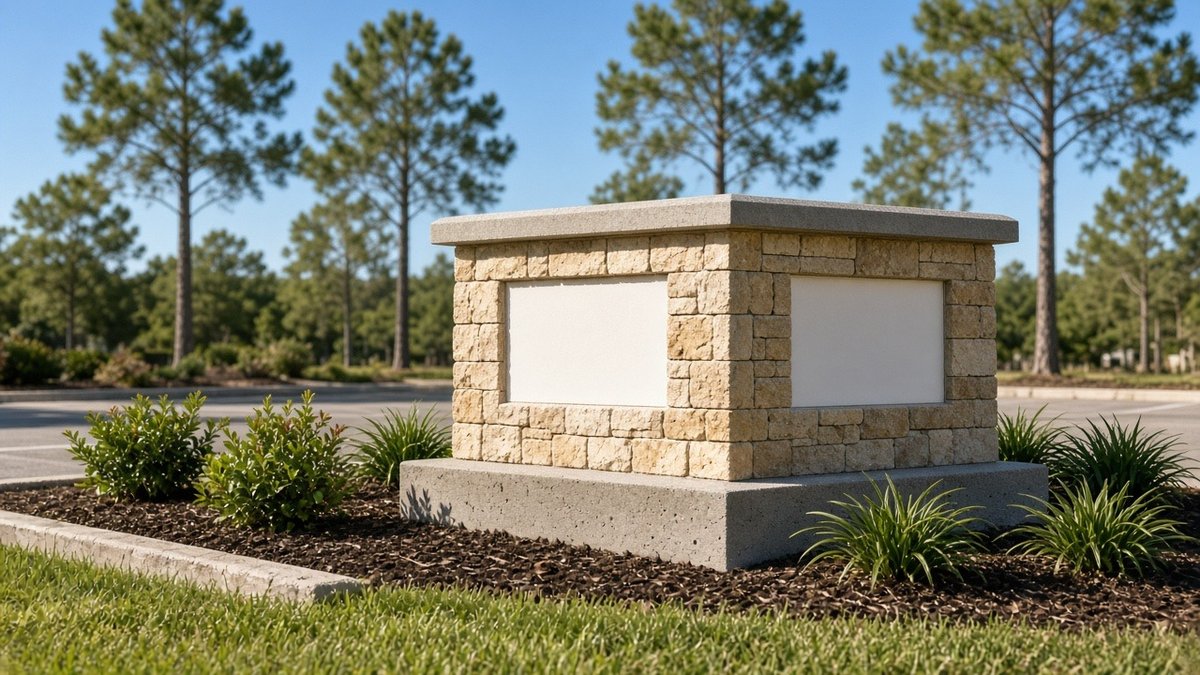
- Ground signs. Monument style signs on a base. The general rule is one ground sign for each 100 feet of public street frontage, spaced apart, and every lot gets at least one. Shared centers have their own formula.
- Pole signs. Tall signs up on poles are generally only allowed close to state highway right of way, so they belong near frontage like Tomball Parkway, not on side streets.
- Wall signs. The code limits how far they stick out and keeps them below the roofline.
- Banners. The code generally allows one banner per property, caps it at 32 square feet, and treats it as temporary. Temporary signs are generally limited to 14 consecutive days.
LED signs and Old Town
Digital and LED message signs get extra scrutiny. Under the current code, they are generally limited to public schools and to locations along state highway right of way outside the Old Town area, and other properties can ask City Council for approval. Where allowed, brightness, message timing, and size are regulated. If an LED sign is in your plan, raise it at the start.
Planned development districts can also carry their own signage terms, so check the zoning on the tract.
What the City does not allow
The code prohibits some signs outright. For retail, the big ones are inflatables, people waving signs or wearing costumes to advertise, portable signs on trailers or wheels, signs stuck in the right of way or on utility poles, and attention getters like pennants, streamers, balloons, and flashing or rotating lights.
Older signs and empty storefronts
Buying an older center? A sign that was legal when it went up but does not meet today's rules can generally stay with normal maintenance. It cannot be enlarged, and if it is badly damaged, the owner may have to remove it or bring it into compliance. The code also treats a sign for a business that has been closed for 180 days or more as prohibited, and a blank sign left without a face or copy for 120 days as a violation. Walk every sign before closing.
Our take
Sign questions are cheaper to answer before a lease is signed than after a sign is built. Get the landlord sign criteria, confirm the zoning, and ask the City about anything unusual. This is general information and not legal advice. Sign rules change, so read the current code and talk with the City and your own attorney before you commit.
If you are weighing a Tomball retail space and want a second set of eyes on signage and visibility, reach out to our team.